How business energy broker commission works
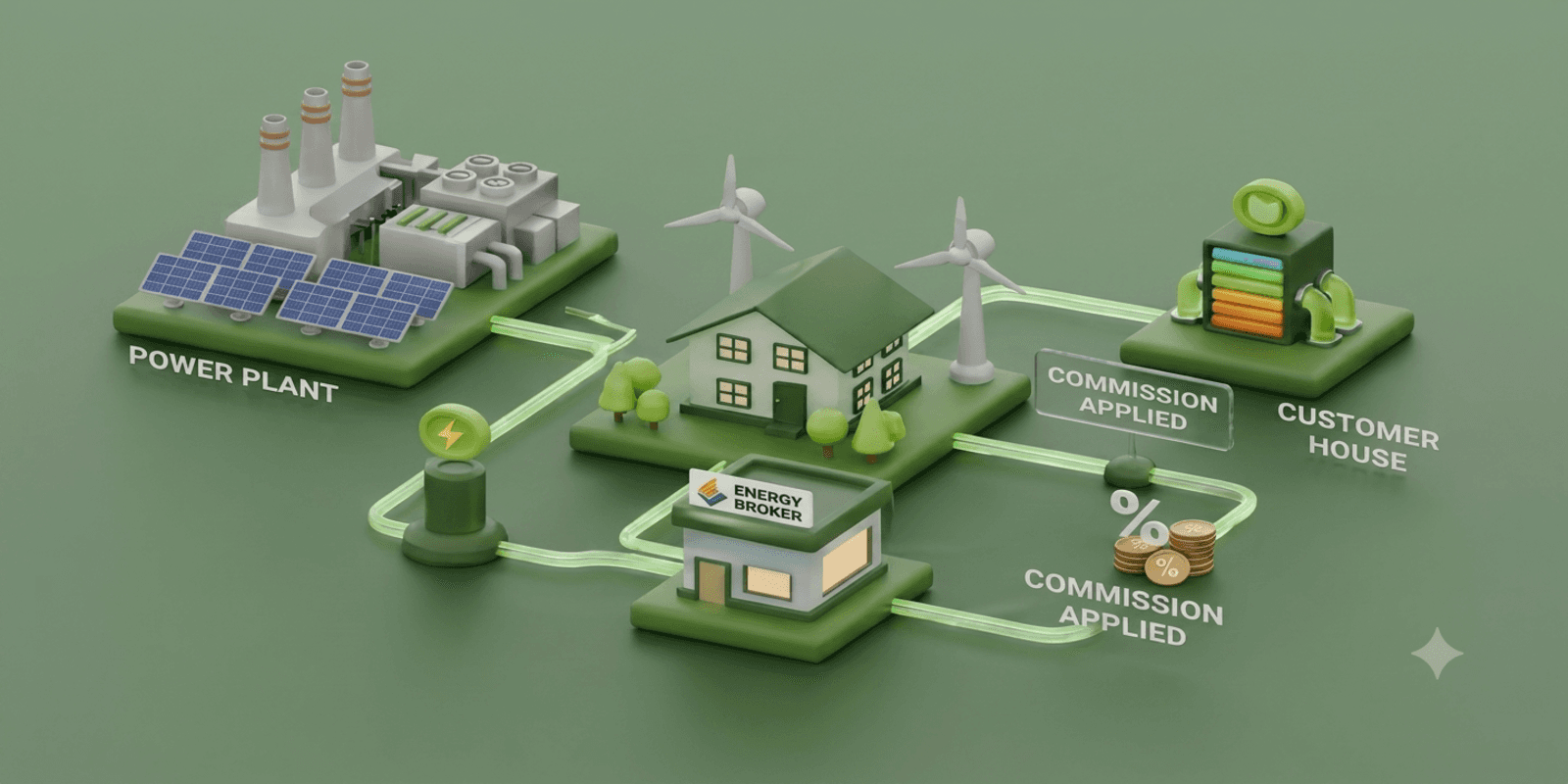
A broker may charge the customer directly or receive commission from the energy supplier, with the cost typically included in the customer’s energy bill.
With indirect commission, an amount can be added to the unit rate. The supplier collects it through the energy bill and passes the agreed payment to the broker.
A small uplift can become a significant total cost.
For example, an illustrative commission of 1p per kWh on a business using 30,000 kWh annually would cost:
30,000 kWh × £0.01 × three years = £900
This is only an example. Actual commission arrangements vary between brokers, contracts, and customers.
Ofgem explains that third party intermediaries can be paid directly or through costs added to the customer’s bill. Information about relevant intermediary costs must be provided through the contract’s Principal Terms and upon request. Read Ofgem’s guidance on third party intermediaries.
Does using a broker always cost more?
Not necessarily.
A good broker may save a business time, explain complex contracts, approach several suppliers and provide support during the agreement.
The question is not simply whether a broker is involved. The important questions are:
- What service will the broker provide?
- Which suppliers will they approach?
- How will they be paid?
- What is the total fee or commission?
- Is the cost included in the unit rate?
- Will support continue after the contract begins?
A broker arranged quote can still be competitive. Equally, a direct quote does not automatically guarantee the lowest price in the market.
Transparency is what matters.
What dealing directly changes
Choosing a direct business energy supplier removes the broker from that particular sale.
This can make the customer journey simpler because you deal directly with the company supplying and billing your energy. It can also remove commission specifically attached to an external broker or introducer.
Smart Pay Energy is designed around this direct relationship, with no unnecessary broker layer and clear information about the offer before the customer agrees.
Read more about Smart Pay Energy.
Compare more than the commission
A quote with no broker fees still needs to be commercially suitable.
Compare:
- Unit rate
- Standing charge
- Estimated annual cost
- Contract length
- Payment method
- Early termination conditions
- Pass through charges
- Other service or metering costs
One quote may have no broker commission but a higher underlying energy price. Another may include a transparent broker fee but produce a lower total annual cost.
Use the same consumption figure and contract dates when comparing the offers. Our guide to getting a cheaper business energy quote explains the process.
Your right to understand the cost
Ofgem expanded its broker fee transparency requirements so that the Principal Terms of contracts signed from 1 October 2024 should clearly display relevant broker fees for non-domestic customers. Suppliers must also make this information available upon request.
Before agreeing, ask:
Is a broker, introducer or third party receiving payment connected with this contract?
Ask for the answer and total cost in writing.
You should also verify unexpected sales calls and avoid accepting an agreement because someone claims the price is available “today only”. Ofgem advises businesses not to feel pressured and to request written terms before agreeing over the phone.
A simpler route to business energy
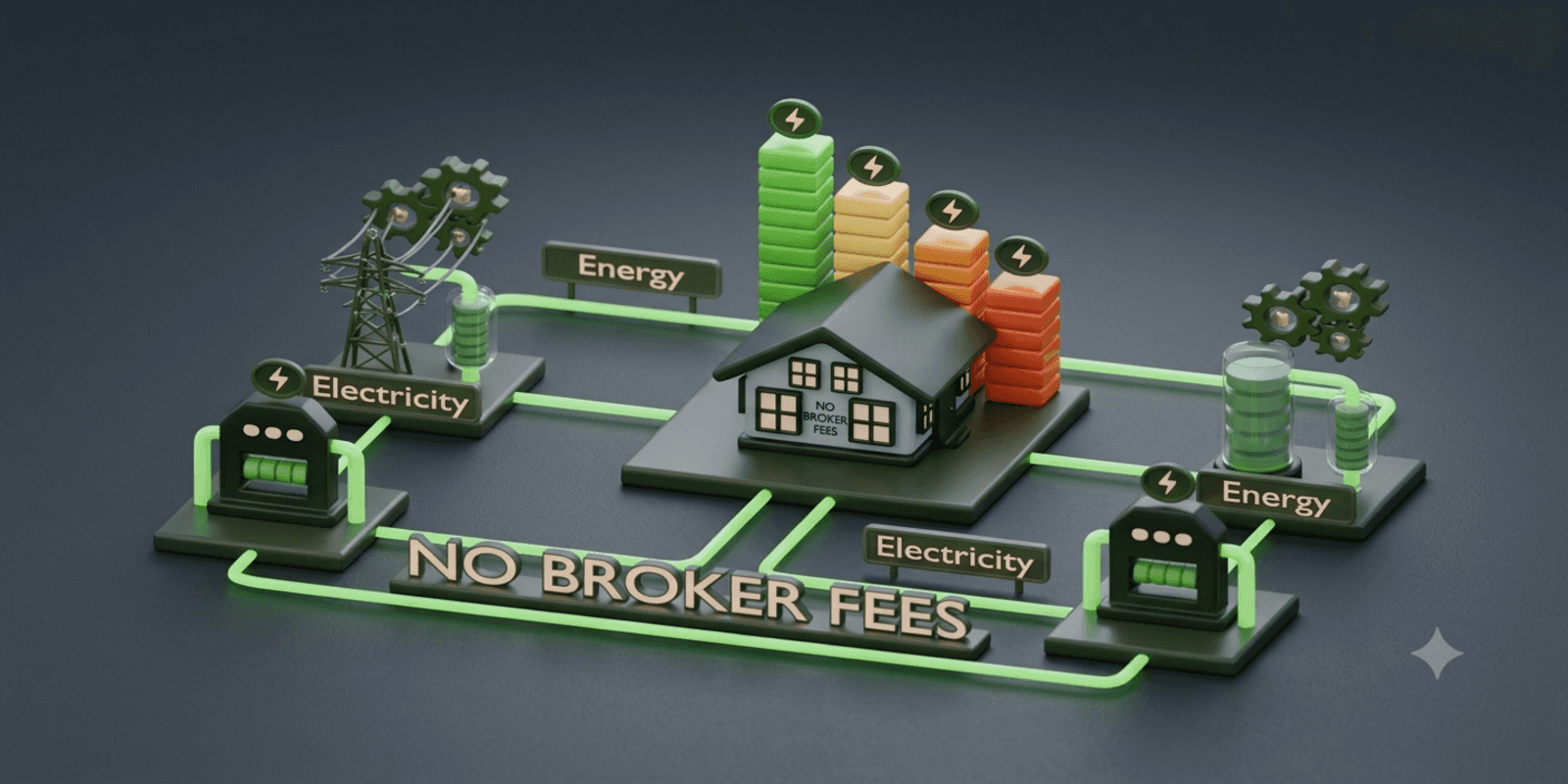
No broker fees should mean more than a marketing slogan.
It should mean the business understands who it is dealing with, what it is paying and whether another organisation is benefiting financially from the contract.
Smart Pay Energy gives SMEs a direct way to arrange business energy, supported by clear rates, straightforward contract information and digital account management.
Explore Smart Pay Energy or get a direct business energy quote.